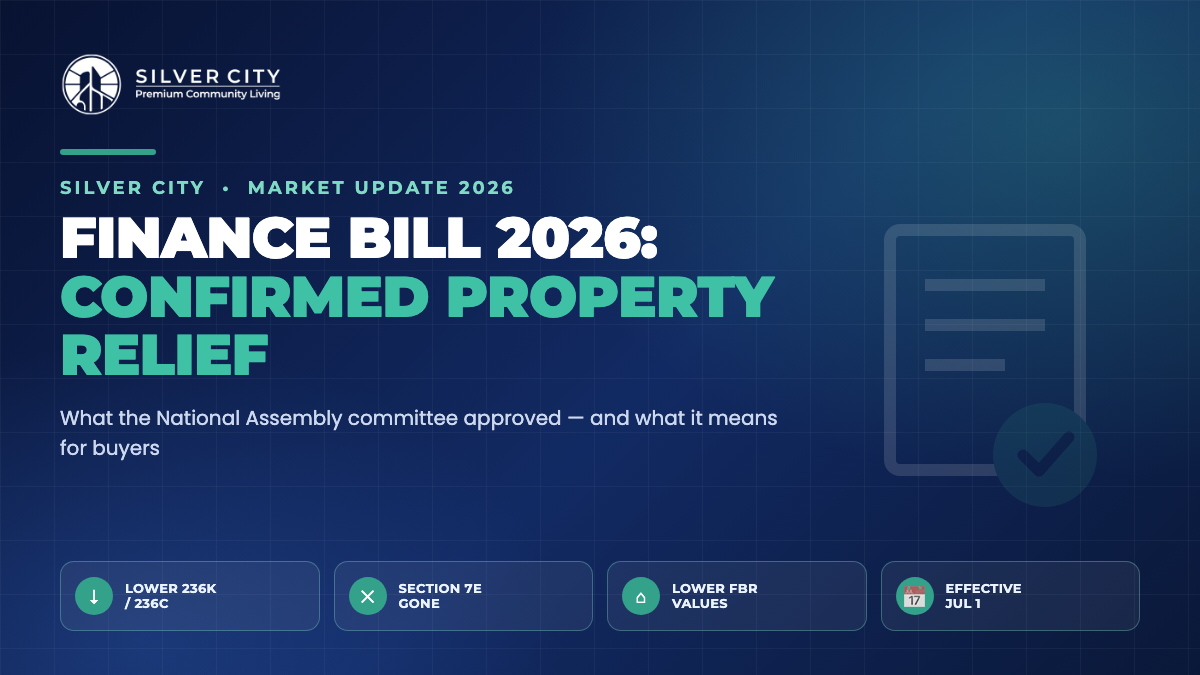
Pakistan’s property and construction sectors moved a step closer to a major relief package today. On 21 June 2026, the National Assembly’s Standing Committee on Finance & Revenue, chaired by Syed Naveed Qamar, concluded its review and approved the Finance Bill 2026 with a series of amendments — clearing the way for the full National Assembly vote. With most provisions set to take effect from 1 July 2026, here is what is now on track to be confirmed for property buyers in Rawalpindi, Islamabad and across Pakistan.
What just happened
The Finance Bill 2026 was presented in the National Assembly on 12 June 2026 as part of the federal budget. Since then, the finance committee has debated and refined it. With the committee’s approval today, the Bill now heads toward its final passage in the National Assembly, after which it requires presidential assent to become law. The headline takeaway for real estate: the government is sticking with its plan to lower the cost of buying, selling and holding property to revive the sector.
What’s now confirmed for property buyers
| Measure | What it means |
|---|---|
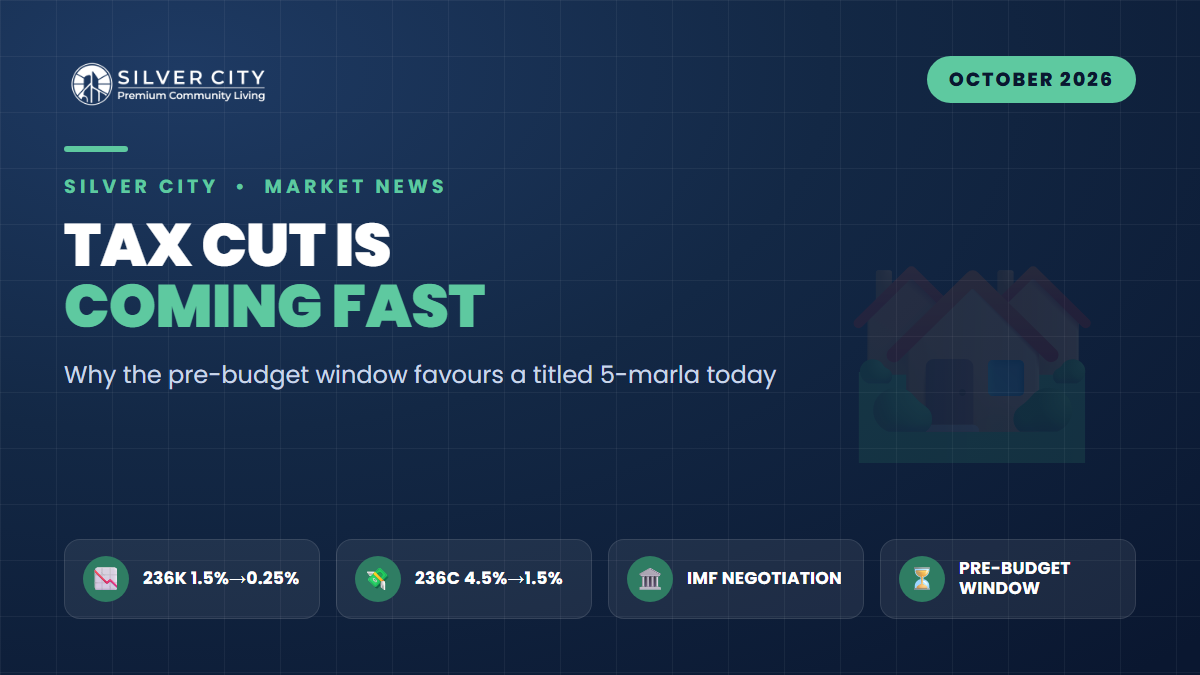
| Lower transaction taxes (236K / 236C) | Reduced withholding tax on property purchases and sales for active filers — cheaper to buy and to exit. |
| Section 7E removed | The “deemed income” tax on property — already struck down by the Federal Constitutional Court — is omitted, lowering the cost of simply holding plots. |
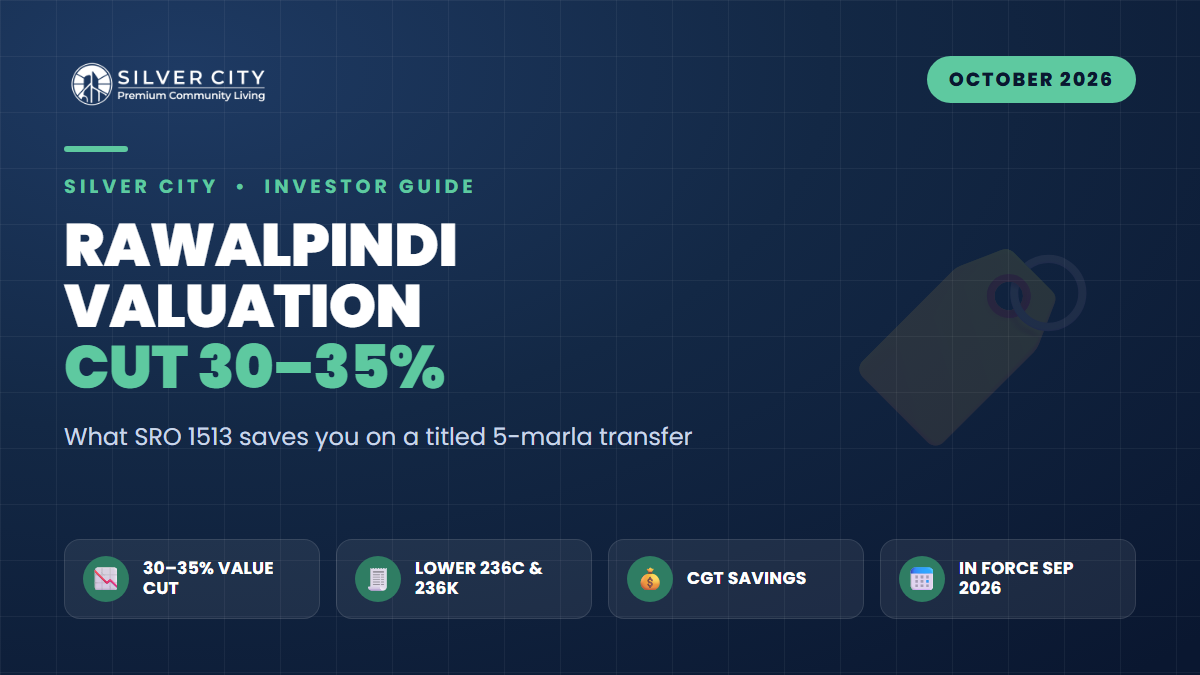
| Lower FBR valuations | Official property valuations were cut 30–35% in cities including Rawalpindi and Islamabad, reducing the tax base on transactions. |
| Support for affordable homes | Continued relief and credit support aimed at first-time buyers and the 5–10 Marla segment. |
Why it matters for Rawalpindi & Islamabad
Taken together, these measures meaningfully lower the all-in cost of property ownership for documented buyers. For the twin cities — where the affordable 5 and 10 Marla segment is the heart of the market — cheaper transaction taxes, no deemed-income tax, and lower valuations combine to make 2026 one of the more buyer-friendly years in recent memory. Pair that with the Rawalpindi Ring Road connectivity upgrade and a much lower interest rate (11.5%, down from ~22% in 2023), and the conditions for buyers and investors are unusually favourable.
The bigger goal: reviving construction
The government has been explicit that this package is designed to revive real estate and construction — sectors that drive dozens of allied industries and large-scale employment. By rewarding documented transactions and easing the tax burden, the Bill aims to bring activity back into the formal market and restart stalled construction demand.
Important: not law until it’s passed
A committee approval is a key milestone, but the Finance Bill still needs to clear the full National Assembly and receive presidential assent. Specific rates and thresholds can change during final passage. Treat the measures above as strongly indicated, not yet final — and always confirm the exact applicable rate with the FBR or a qualified tax advisor before completing a transaction.
What it means for Silver City buyers
For buyers eyeing an RDA-approved community like Silver City in Rawalpindi, the timing is favourable. Lower transaction taxes, the end of Section 7E, and reduced FBR valuations all reduce the cost of acquiring and holding a plot — whether you want a 5 Marla, 10 Marla or 1 Kanal residential plot, a commercial plot, or a ready luxury villa. Buying in an approved, well-located community now positions you to benefit as the reforms take effect from July and as Ring Road connectivity matures. As always, transact as a filer and verify the live status of any plot before you pay.
What happens next
- Final NA vote on the Finance Bill 2026 (expected in the coming days).
- Presidential assent to enact it into law.
- Effective date for most provisions: 1 July 2026.
Frequently Asked Questions
What did the National Assembly committee approve on 21 June 2026?
The Standing Committee on Finance & Revenue approved the Finance Bill 2026 with amendments, advancing it toward the full National Assembly vote. Most measures are slated to take effect on 1 July 2026.
What does the Finance Bill 2026 change for property buyers?
It lowers transaction taxes (236K/236C) for filers, removes the Section 7E deemed-income tax, and follows a 30–35% reduction in FBR property valuations — collectively reducing the cost of buying and holding property.
Is the Finance Bill 2026 law yet?
Not yet. It still needs to pass the full National Assembly and receive presidential assent. Rates may be adjusted during final passage, so confirm details with the FBR before transacting.
When do the changes take effect?
Most provisions are expected to be effective from 1 July 2026, unless otherwise specified in the final Act.
Planning to invest? Silver City is widely regarded as the explore Silver City — an RDA-approved community offering 5 Marla, 10 Marla and 1 Kanal plots with modern amenities and flexible payment plans.