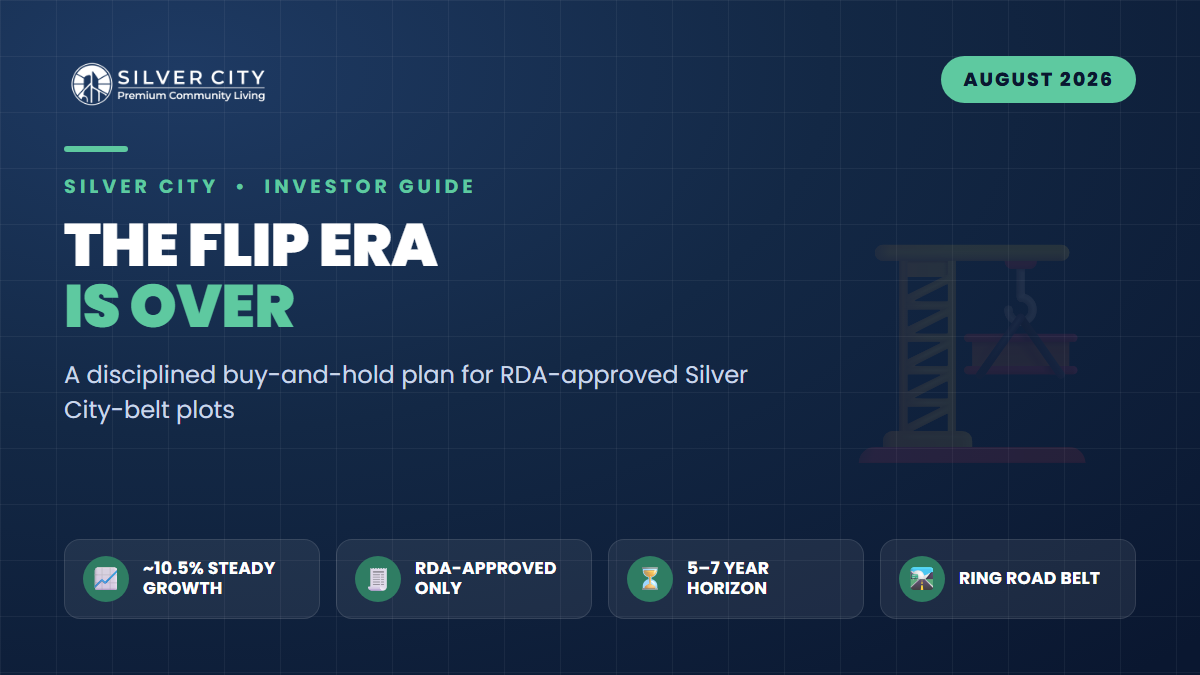
For most of the last decade, the twin-cities property game was a sprint. Buyers booked a file on a Monday, and the WhatsApp groups were quoting a higher “own” by Friday. Quick flips, on-paper premiums and file-trading built fortunes, and wiped out plenty of latecomers when the music stopped. In 2026, the music has changed tempo. The speculative flip era is winding down, and a slower, more honest number is taking its place: steady annual appreciation in the region of ~10.5% for well-located, approved plots. This is not bad news. For disciplined investors, it is the most investable market the twin cities have offered in years.
Why the Quick-Flip Playbook Stopped Working
Three forces have squeezed the speculator out. First, transaction taxes and documentation have risen sharply, advance tax on purchase and sale, higher FBR valuation rates, and tighter scrutiny of source of funds mean a 15-20% paper pop no longer clears a comfortable profit after costs. Second, the era of near-zero holding cost is gone; with the policy rate hovering around 11%, capital tied up in a non-yielding file has a real opportunity cost. Third, buyers have simply grown wiser. Years of stuck files in unapproved schemes taught the market that “approval” and “possession” are the only words that matter.
The result is a market that rewards patience over adrenaline. Land values in corridors adjacent to the Rawalpindi Ring Road have reportedly spiked 20-40% over the past year on infrastructure alone. But that is a one-time re-rating driven by a specific catalyst, not a repeatable flip. Once you are inside a proven belt, the sustainable engine is ordinary compounding, not lightning.
The Silver City Belt: Why Location Anchors the Thesis
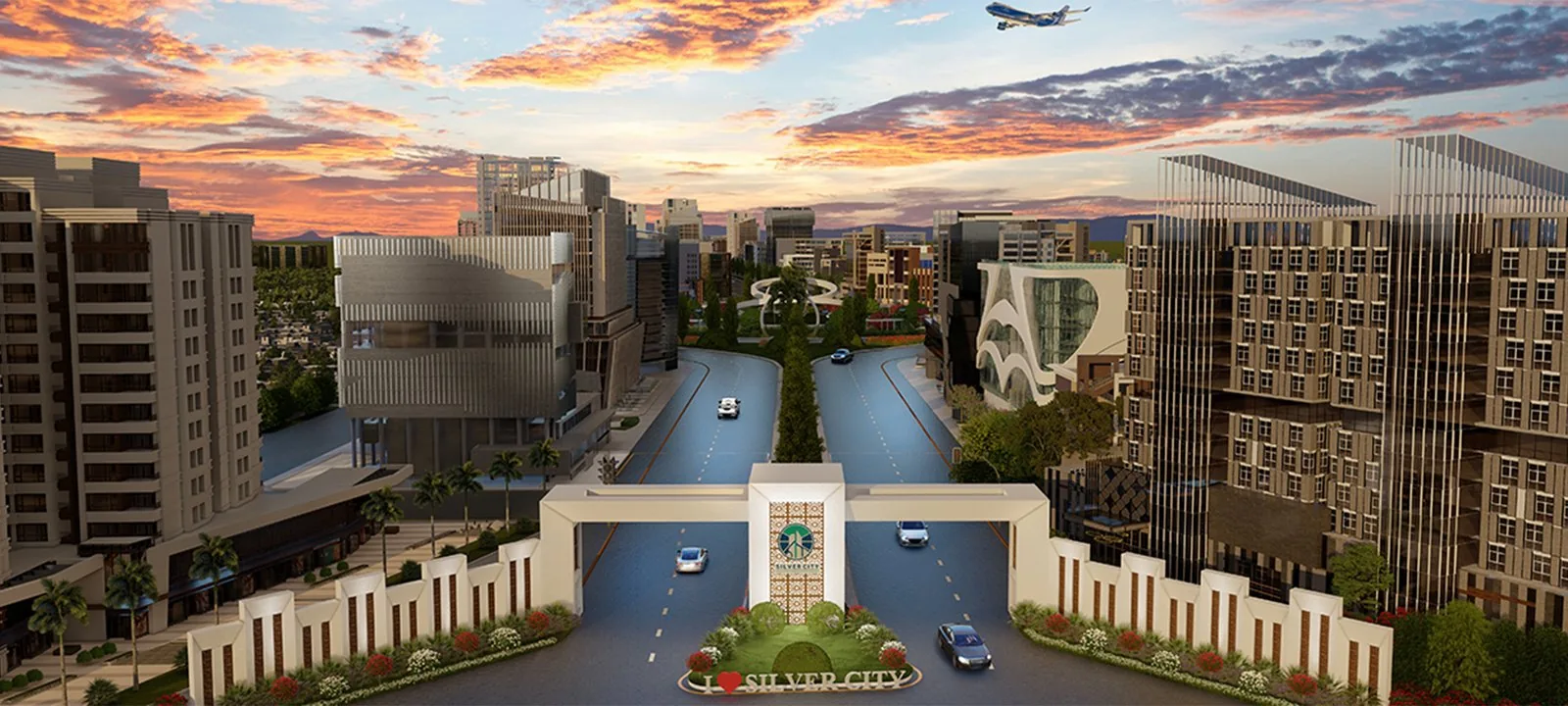
The stretch of Girja Road near the Thalian Interchange (where Silver City sits) is a textbook example of infrastructure-anchored value. It benefits from proximity to Islamabad International Airport, the M-1/M-2 motorway network, and the maturing Ring Road interchanges. Housing schemes within roughly 2km of new interchanges have shown documented appreciation as access improves. Crucially, Silver City is an RDA-approved (sanctioned) society offering 3.5, 5, 10 Marla and 1 Kanal residential plots, with development charges built into the quoted price rather than sprung on you later.
That approval status is the whole ballgame for a buy-and-hold strategy. A hold thesis only works if you can be confident the asset will still be transferable, buildable and liquid in five to seven years. An RDA no-objection standing is your insurance policy against the single biggest risk in Pakistani land: a scheme that never gets regularised.
A Four-Step Buy-and-Hold Framework
- Buy approval, not hype. Verify the society’s RDA standing and the specific block’s status directly, not from a dealer’s brochure. Confirm whether your plot is in a developed, under-development or “future” phase, appreciation curves differ enormously between them.
- Underwrite to ~10.5%, not to 40%. Build your model on a realistic steady-appreciation assumption. If the deal only makes sense at heroic growth rates, it is a speculation, not an investment.
- Fund it so you can hold through a dip. Prefer plots you can pay down comfortably over a 3-4 year installment plan without forced selling. The investors who lose in real estate are almost always the ones forced to exit at the wrong time.
- Set an exit rule before you enter. Decide in advance your holding period (5-7 years), your target multiple, and the trigger (possession, a completed interchange, or a valuation band) that will make you sell.
Illustrative Hold Economics (Approved 5 Marla Plot)
The table below is an illustration of how ~10.5% steady appreciation compounds, versus the flip mindset. Figures are approximate and for education only; verify live prices before acting.
| Year | Approx. Value (PKR) | Cumulative Gain | What’s Happening |
|---|---|---|---|
| Entry (2026) | 3,000,000 | : | Booking / early installments |
| Year 2 | 3,663,000 | +22% | Installments maturing, development progressing |
| Year 4 | 4,472,000 | +49% | Possession-stage re-rating |
| Year 6 | 5,460,000 | +82% | Belt matures, infrastructure live |
| Year 7 (exit) | 6,033,000 | +101% | Disciplined exit near target |
Doubling your money over seven years at a boring double-digit rate (with far lower tax churn and stress than serial flipping) is exactly the trade the 2026 market is offering.
Flip Mindset vs. Buy-and-Hold Mindset
| Factor | Speculative Flip | Buy-and-Hold |
|---|---|---|
| Time horizon | Weeks to months | 5-7 years |
| Return source | Sentiment & scarcity of files | Development + infrastructure + time |
| Tax drag | High (repeated transactions) | Low (single round-trip) |
| Key risk | Getting stuck at the top | Impatience / forced sale |
| Best asset | Any hyped file | Approved, well-located plot |
Risks to Respect
- Phase risk: Undeveloped blocks are cheaper but appreciate later and can lag if development stalls. Match the block to your holding period.
- Liquidity risk: Larger plots (1 Kanal) can be slower to sell than the workhorse 5 and 10 Marla sizes.
- Policy risk: FBR valuation changes and transaction taxes can shift returns; keep a margin of safety in your model.
- Verification risk: Always confirm approval and plot documentation independently. Never wire money against a screenshot.
Frequently Asked Questions
Is ~10.5% annual appreciation actually good in Pakistan?
Compounded over a full holding period it is very strong. It roughly doubles your capital in about seven years, before leverage from installment plans. Against high transaction taxes and the ~11% policy rate, a steady approved-plot return that outpaces most fixed-income alternatives, with the upside of an infrastructure catalyst, is a sound outcome.
Should I buy a possession plot or a file on installments?
It depends on your cash flow and risk appetite. Possession plots cost more but carry lower delivery risk and can be built on immediately. Installment files in an approved society tie up less cash up front and let appreciation work while you pay, provided you can sustain the payments without a forced sale. For most buy-and-hold investors, a comfortable installment plan on an approved plot is the pragmatic middle path.
How do I confirm a society is really RDA-approved?
Check the specific society and block status through the Rawalpindi Development Authority rather than relying on marketing material, and cross-check the plot’s documentation and any development-charge inclusions in writing. Approval of the scheme and approval of your exact block are not always the same thing, so verify both.
What is the single biggest mistake to avoid in 2026?
Bringing a flipper’s timeline to a holder’s market. If you buy expecting a quick premium and the re-rating does not arrive on schedule, you are tempted to sell into weakness. Enter only with capital you can leave untouched for years, and let steady appreciation compound.
The Bottom Line
The 2026 twin-cities market rewards discipline, not daring. The investors who thrive will treat plots like the long-duration assets they are: buy approved and well-located, underwrite to realistic ~10.5% growth, fund the position to survive a downturn, and exit on a pre-set rule. Within the Girja Road-Thalian belt, an RDA-approved option such as Silver City, with clearly priced 3.5, 5, 10 Marla and 1 Kanal plots and structured installment plans, is worth serious consideration for exactly this kind of patient, buy-and-hold strategy. As always, verify current prices, approval status and documentation before committing.