From Corridors to Factories: What Changed in August 2026
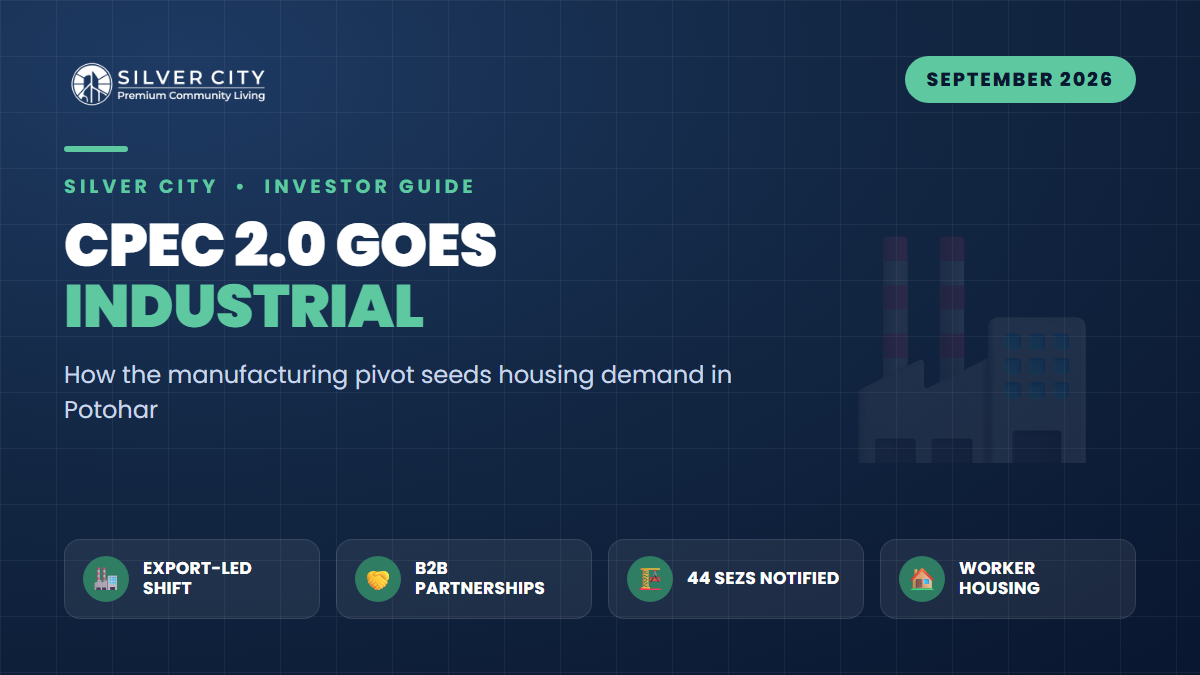
For its first decade, the China–Pakistan Economic Corridor (CPEC) was mostly about roads, ports and power plants. Phase I (2015–2024) delivered motorways, Gwadar and thousands of megawatts of generation. In August 2026, the conversation shifted decisively. During a series of high-level meetings at the CPEC Secretariat in Islamabad, a Chinese delegation led by senior adviser Sun Dongsheng and Pakistani policymakers, including Planning Minister Ahsan Iqbal, agreed to deepen business-to-business (B2B) and industrial cooperation under what is being called CPEC 2.0.
The framing is explicit: move from infrastructure to industrialization, from connectivity to competitiveness, and from government-to-government deals to enterprise-led partnerships. The logic is simple. China imports roughly USD 2.6 trillion of goods a year, while Pakistan’s exports to China sit near USD 3 billion. Closing even a sliver of that gap means building factories, and factories in Pakistan increasingly mean Special Economic Zones (SEZs) as anchor platforms.
Days later, the Rawalpindi Chamber of Commerce and Industry (RCCI) hosted a visiting Chinese commercial delegation for a dedicated B2B session, targeting joint ventures and technology transfer in areas such as smart manufacturing, cold-chain logistics, poultry processing and agri-tech. When industrial activity clusters, so does the demand for people to live near it, and that is where property investors should pay attention.
Why This Matters for the Rawalpindi–Potohar Belt
Manufacturing is a jobs machine. A working industrial zone creates thousands of line workers, supervisors, engineers, logistics staff and service providers, most of whom need housing within a 20–30 minute commute. Historically, that demand has outrun supply, pushing rents up and pulling end-users toward affordable, legally-secure schemes on the city’s growth edges.
The Potohar region around Rawalpindi and Islamabad is well positioned. It sits on the M-1/M-2 motorway spine, hosts the New Islamabad International Airport, and is anchored by the planned Rawalpindi Ring Road (RRR). By the January 2026 PMU CPEC briefing, the number of notified SEZs had expanded from a handful to 44 zones, with 37 newly notified by the Board of Investment, several of them within reach of the twin cities.
Industrial Zones Shaping Twin-Cities Housing Demand
| Zone / Estate | Location | Approx. distance from Rawalpindi | Focus | Status (2026) |
|---|---|---|---|---|
| Islamabad Model SEZ (IMSEC) | Near Rawat, Islamabad Expressway / N-5 | Within ICT–Rawat belt | Mixed light manufacturing | Inaugurated 2023, developing |
| Rawalpindi Ring Road Industrial Estate | Near RRR corridor | Within district | General industry | Planned (announced 2025) |
| Rawat Industrial Estate | Rawat, southeast Rawalpindi | ~20–25 km | Established SME base | Operational, being upgraded |
| Hattar Economic Zone | Haripur, KP | ~40–50 km | FMCG, pharma, packaging | Operational |
| Rashakai SEZ | Nowshera, KP (via M-1) | ~90 km | Textiles, food, packaging | Phase 1 (247 acres) developed |
Note: SEZ classifications remain fluid. The Rawalpindi Ring Road Industrial Estate, for instance, was reframed from a full SEZ into an industrial estate partly to align with IMF fiscal commitments. Investors should treat zone status as a moving target and verify before committing.
How the Housing Demand Actually Flows
Industrialization rarely creates one uniform buyer. It creates layers of demand, and each layer maps to a different product:
- Rental worker housing: line workers and junior staff drive demand for affordable rentals and small plots (3.5–5 marla) close to zones and transit routes.
- End-user ownership: supervisors, technicians and mid-tier managers increasingly prefer to buy in secure, legally-approved societies rather than rent indefinitely.
- Investor / commercial demand: as populations cluster, shops, guest houses, hostels and service commercial gain footfall and yield.
The twin cities already show this pull: professionals working in Islamabad are steadily moving to Rawalpindi for better value, a trend that layered industrial jobs will only accelerate.
Positioning Silver City Ahead of the Wave
Silver City is an RDA-approved housing society developed as a joint venture between Laraib Associate & Developers (Pvt) Ltd and the SAREMCO Group, located on Girja Road near the Thalian Interchange, close to the New Islamabad International Airport. That places it inside the motorway-and-airport growth belt where industrial and logistics activity is expected to concentrate under CPEC 2.0.
Two attributes make it relevant to an industrialization thesis. First, legal security: an RDA No Objection Certificate reduces the regulatory risk that sinks so many speculative files. Second, affordability and connectivity: entry-level plots have historically been marketed with modest down payments (some 3.5 marla options starting around PKR 200,000 down on installment plans), which suits both end-users and yield-focused investors chasing rental demand from a growing workforce.
A Practical Due-Diligence Checklist
- Confirm the current RDA approval and plan status directly on the RDA private housing schemes list.
- Verify the exact plot price and payment plan in writing before booking—advertised figures change.
- Map your plot’s real drive time to the nearest active industrial zone and to the motorway/RRR.
- Prefer possession-ready or near-possession phases if you intend to rent to workers soon.
- Track SEZ notifications and Ring Road progress as leading indicators of demand.
Frequently Asked Questions
Does CPEC 2.0 directly build housing in Rawalpindi?
No. CPEC 2.0 focuses on industrial cooperation, export-oriented manufacturing and B2B investment, using SEZs as anchors. Housing demand is a secondary, market-driven effect: as factories and zones create jobs, workers and staff need places to live nearby, which lifts demand in surrounding legal societies.
Is Silver City close to any confirmed industrial zone?
Silver City sits in the Rawalpindi–Islamabad growth belt near the New Islamabad International Airport and the motorway network, within the broader Potohar zone where several industrial estates (Rawat, the planned Ring Road estate) and SEZs are located. Always measure the specific commute distance for your plot, as it varies across the belt.
Is this a safe time to invest, given IMF and policy shifts?
Policy remains fluid—some zones have been reclassified for fiscal reasons. That argues for lower-risk fundamentals: buy in an RDA-approved scheme, verify documents, avoid over-leverage, and treat industrialization as a multi-year tailwind rather than an overnight windfall.
What plot size makes sense for worker-driven rental demand?
Smaller residential plots (3.5–5 marla) and select service-commercial units typically align best with worker and junior-staff rental demand, offering lower entry cost and quicker tenancy near employment clusters.
The Bottom Line
CPEC 2.0’s August 2026 pivot from infrastructure to export-led manufacturing is a structural signal, not a headline. As B2B partnerships and SEZs multiply across the Rawalpindi–Potohar belt, the workers and professionals they employ will need housing close by. For investors who prefer fundamentals over hype, an RDA-approved, well-connected option such as Silver City is worth considering as part of a diversified, due-diligence-led approach to the coming industrialization wave. Verify every figure and approval directly before you commit.