The policy shift: what actually ended on 1 July 2026
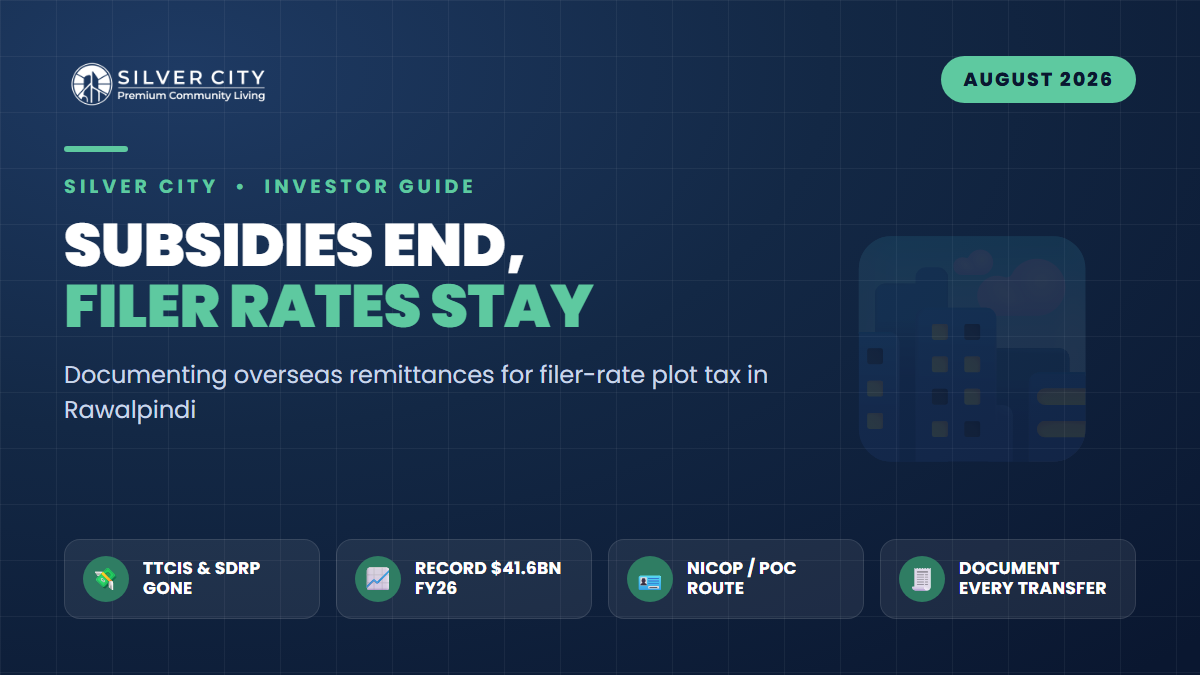
From 1 July 2026, the State Bank of Pakistan (SBP) discontinued two long-running subsidies for home remittances: the Telegraphic Transfer Charges Incentive Scheme (TTCIS), under which SBP reimbursed banks and exchange companies so overseas Pakistanis could send money free of charge, and the Sohni Dharti Remittance Programme (SDRP), which awarded reward points redeemable against fees, tickets and services. The move followed International Monetary Fund (IMF) scrutiny over the ballooning fiscal cost of these schemes.
Two details matter for investors. First, reward points earned up to 30 June 2026 can still be redeemed until 30 June 2027, after which the SDRP closes entirely. Second, and more importantly, several banks have signalled they will continue to offer remittance transfers free of charge to senders and beneficiaries as a commercial decision — so the practical cost of sending money may not jump for everyone overnight.
The context is striking: SBP ended the subsidies in the very year remittances hit an all-time high of US$41.6 billion in FY26, up roughly 8.6% year-on-year, with Saudi Arabia (US$9.78bn) and the UAE (US$8.8bn) leading inflows. In other words, the government judged that the formal-channel habit is now strong enough to survive without a taxpayer-funded push.
Why this does NOT change your property tax treatment
Here is the single most important point for anyone funding a plot in Rawalpindi from abroad: TTCIS and SDRP were about transfer fees and loyalty points — they were never the basis of your filer-rate tax treatment on property. Your access to filer rates on advance tax under Section 236C (paid by the seller) and Section 236K (paid by the buyer) flows from a completely separate mechanism: your status as a non-resident holding a NICOP or POC, plus a documented, banking-channel money trail. That mechanism is untouched by the SBP decision.
What has changed is the margin for sloppiness. With no subsidy nudging you toward a specific channel, some overseas Pakistanis may drift toward informal transfers (hundi/hawala) or cash carried by relatives. That is precisely the trap: an undocumented rupee funding your plot cannot be traced to a foreign remittance, which weakens both your filer-rate claim and any future source-of-funds question from the FBR.
Filer vs non-filer: the gap that makes documentation worth it
Advance tax on property is where filer status pays for itself. Rates are revised each budget and vary by property value, so always confirm the current slab before a deal, but the indicative structure for 2026 looks like this:
| Property value | 236K buyer — Filer | 236K buyer — Non-filer | 236C seller — Filer | 236C seller — Non-filer |
|---|---|---|---|---|
| Up to Rs 50 million | ~1.5% | ~10.5% | ~4.5% | ~11.5% |
| Rs 50m–100m | ~2.0% | ~14.5% | ~5.0% | ~11.5% |
| Above Rs 100 million | ~2.5% | ~18.5% | ~5.5% | ~11.5% |
On a Rs 40 million plot, the buyer-side difference between a filer and a non-filer can exceed Rs 3.5 million in advance tax alone. Crucially, non-resident NICOP/POC holders can obtain the filer rate even without being active on the Active Taxpayers List, provided the FBR verifies their overseas status — which is why the paperwork below is the whole ball game.
How to route and document remittances to secure filer-rate treatment
Think of it as building an unbroken chain from your overseas salary to the plot registry. Every link must be documented.
- Send through formal channels only. Use a Roshan Digital Account (RDA), a non-resident foreign-currency/rupee account, or a bank/exchange company that issues proper credit advice. RDA is ideal because it is purpose-built for overseas Pakistanis and generates clean, FBR-recognised records.
- Keep the proof of inflow. Retain the Proceeds Realization Certificate (PRC) or bank credit advice for each transfer. This document links the foreign remittance to your Pakistani account and is your strongest evidence of source of funds.
- Fund the purchase from the documented account. Pay the seller, society or authority from the same account that received the remittance — ideally by pay order or bank transfer, not cash — so the audit trail continues intact.
- Generate the PSID via the overseas Pakistani option. When the transaction is booked, the registrar, authority or housing society creates the PSID (Payment Slip ID) selecting the overseas Pakistani route, enters your NICOP/POC, uploads a scanned copy, and attaches your residence-status evidence.
- Let the case route to the Commissioner Inland Revenue. The Commissioner verifies non-resident status; on approval, tax is charged at the filer rate. “Non-resident” generally means presence in Pakistan of less than 183 days in the tax year, so keep passport/immigration stamps handy.
- File a return anyway if you can. Getting onto the Active Taxpayers List removes any ambiguity, lets you adjust the deducted advance tax against your liability, and shields you if the verification route is delayed.
A practical timeline for a Rawalpindi plot purchase
| Stage | Action | Document produced |
|---|---|---|
| 1. Funding | Remit via RDA / bank channel | PRC / credit advice |
| 2. Verification | Confirm NICOP/POC valid & non-resident status | NICOP/POC scan, passport stamps |
| 3. Booking | Society issues allotment / transfer letter | Booking receipt, file |
| 4. Tax | PSID via overseas option → Commissioner IR | PSID, filer-rate challan |
| 5. Registry | Transfer at sub-registrar / RDA authority | Registered deed |
Frequently Asked Questions
Does the end of TTCIS and Sohni Dharti raise my property taxes?
No. Those schemes only covered transfer fees and reward points. Your 236C/236K rate depends on your filer/non-resident status and a documented banking-channel trail, none of which the SBP decision alters.
Can I still get filer rates if I have never filed a tax return in Pakistan?
Yes, if you are a non-resident NICOP or POC holder and the FBR verifies your status through the overseas Pakistani PSID route. However, filing a return and appearing on the Active Taxpayers List is the safest, friction-free path.
Is a Roshan Digital Account mandatory to buy a plot from abroad?
It is not strictly mandatory, but an RDA (or another documented non-resident account) is strongly recommended because it produces the cleanest inflow records and simplifies both the filer-rate claim and any source-of-funds review.
What single mistake most often costs overseas investors the filer rate?
Funding the purchase with cash or informal (hundi/hawala) transfers that cannot be tied to a foreign remittance. Without a PRC or credit advice linking the money to your NICOP/POC, the filer-rate verification becomes difficult.
Wrap-up
The subsidy era has ended, but the real opportunity for overseas Pakistanis — filer-rate tax on Rawalpindi property — is fully intact for those who route money formally and keep every receipt. Choose transparent, well-managed projects to make that documentation trail straightforward. As an RDA-approved housing society, Silver City in Rawalpindi is one such option worth considering, offering the kind of clear allotment and banking-channel paper trail that pairs naturally with a disciplined, filer-rate remittance strategy. Always confirm the latest FBR rates and consult a tax advisor before finalising your deal.