If you own a 5-marla plot in Rawalpindi, the question in late 2026 is not whether property is a good asset. It is which form of the asset works hardest for you right now: raw land, or a built house. With grey-structure inputs climbing sharply this year, the maths has shifted. This article walks through the current numbers so you can decide with data rather than sentiment.
What Construction Actually Costs in August 2026
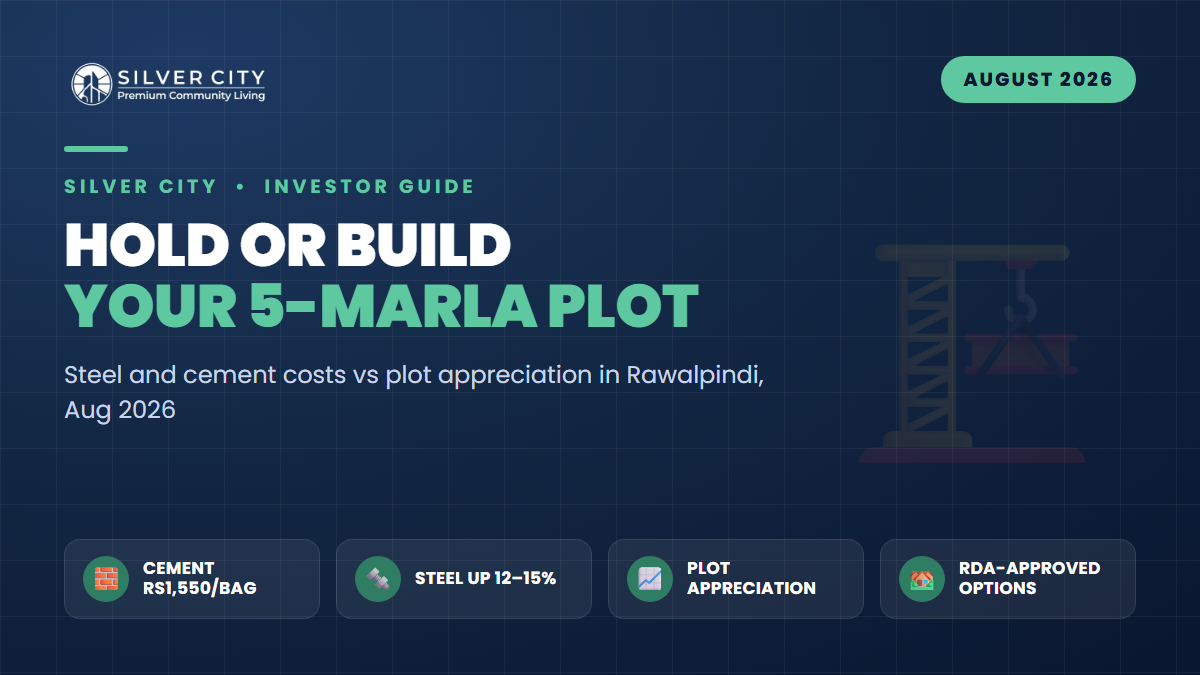
Two materials drive the grey structure (the concrete-and-steel skeleton before any finishing) and both have moved against builders this year. Grade-60 steel (saria) is trading at roughly Rs258,000-265,000 per ton in August 2026, up an estimated 12-15% over the past year. Cement now sits near Rs1,550 per bag nationally, with Rawalpindi and Islamabad dealers quoting roughly Rs1,400-1,610 depending on brand.
Because steel and cement together make up the bulk of grey-structure spend, these rises flow straight into the per-square-foot rate. Contractors across the twin cities now quote grey structure at Rs2,800-4,500 per sq ft, with Rs3,000-3,500 a realistic mid-range for a standard 5-marla build.
| Input (Aug 2026) | Typical Rate | Year-on-Year Move |
|---|---|---|
| Grade-60 steel (saria) | Rs258,000-265,000 / ton | Up ~12-15% |
| Cement (50kg OPC bag) | ~Rs1,550 (Rwp/Isb Rs1,400-1,610) | Firm to higher |
| Grey structure | Rs2,800-4,500 / sq ft | Up |
| Bricks | ~Rs22 each (55,000+ for a 5M house) | Firm |
Costing a 5-Marla Grey Structure Today
A 5-marla double-storey house typically has around 1,900-2,000 sq ft of covered area. At current rates, the grey structure alone lands like this:
- Conservative: 1,900 sq ft × Rs2,800 = ~Rs53.2 lakh
- Mid-range: 2,000 sq ft × Rs3,200 = ~Rs64 lakh
- Higher spec: 2,000 sq ft × Rs4,000 = ~Rs80 lakh
And this is before finishing (plaster, flooring, electrical, plumbing, doors, kitchen and bathrooms) which commonly adds another 40-60% on top. In other words, a completed 5-marla house today is frequently a Rs1 crore-plus proposition once land, grey structure and finishing are combined.
How Does That Compare to Plot Appreciation?
Here is the crux. Grey-structure costs have risen with steel and cement, but they are a one-time sunk cost. Plot value, by contrast, compounds. In a well-located, RDA-approved society a 5-marla plot has historically appreciated at a healthy annual clip, and it does so with near-zero carrying cost, no depreciation, and full liquidity.
Consider a simple framing for a 5-marla plot bought around Rs20-25 lakh in the resale market (primary allotments on installment can start near Rs15 lakh):
| Scenario | Capital Tied Up | Depreciates? | Liquidity |
|---|---|---|---|
| Hold the plot | ~Rs20-25 lakh | No: land only | High; sell any time |
| Build now (grey + finish) | +Rs1 crore approx | Yes: structure ages | Lower; buyer pool smaller |
Why “grey structure outpacing appreciation” matters
When construction inflation runs hot, every year you delay building costs more in absolute rupees. That is the argument for building now. But the counter-argument is stronger for most investors: a house is not a pure investment. Roughly a third or more of a built home’s value sits in a depreciating structure and finishes that date quickly, while the land underneath keeps appreciating whether or not a house sits on it. If your goal is capital growth, the plot is the growth engine; the building is a lifestyle or rental-yield decision.
A Decision Framework
- Building to live in? Rising costs argue for acting sooner rather than later, because construction inflation rarely reverses. Lock your BOQ and buy steel/cement in phases to manage price swings.
- Building to sell (flip)? Be cautious. With grey-structure costs high, your build cost may not be fully recoverable in the resale price, the market often pays a discount versus total build cost. Run the numbers on comparable sold houses first.
- Building to rent? Compare annual rent against your all-in cost. In many Rawalpindi societies gross yields sit in the low-to-mid single digits, so payback is slow.
- Purely investing? Holding the plot usually wins. You keep liquidity, avoid a depreciating asset, and let land appreciation compound tax-light.
Practical Tips If You Do Build
- Get at least three contractor quotes and insist on an itemised BOQ (bill of quantities), not a lump-sum figure.
- Fix material rates in the contract where possible, or self-procure steel and cement to avoid contractor markups.
- Time bulk steel purchases carefully, saria prices move week to week.
- Confirm your society’s building bylaws and map-approval process before laying foundations.
Frequently Asked Questions
Is it cheaper to build now or wait for construction costs to fall?
Steel and cement have trended up through 2026 and rarely fall meaningfully in rupee terms once they rise. If you have firmly decided to build for personal use, waiting usually costs more. If you are unsure, holding the plot preserves the option without committing crores.
Will building a house on my 5-marla plot increase its value more than just holding?
It increases the total sale price, but not always the return on money spent. Much of a house’s value is in a depreciating structure, so build cost is not always recovered dollar-for-dollar. For pure appreciation, the plot itself is typically the better performer.
How much does a 5-marla grey structure cost in Rawalpindi in 2026?
Roughly Rs53-64 lakh for a double-storey home of about 1,900-2,000 sq ft at current per-sq-ft rates, before finishing. Higher specifications can push the grey structure toward Rs80 lakh.
What appreciates faster: a plot or a built house?
Land generally appreciates faster on a percentage basis because it does not depreciate and carries no maintenance drag. A built house can deliver rental income, but the structure loses value over time even as the land beneath it gains.
The Bottom Line
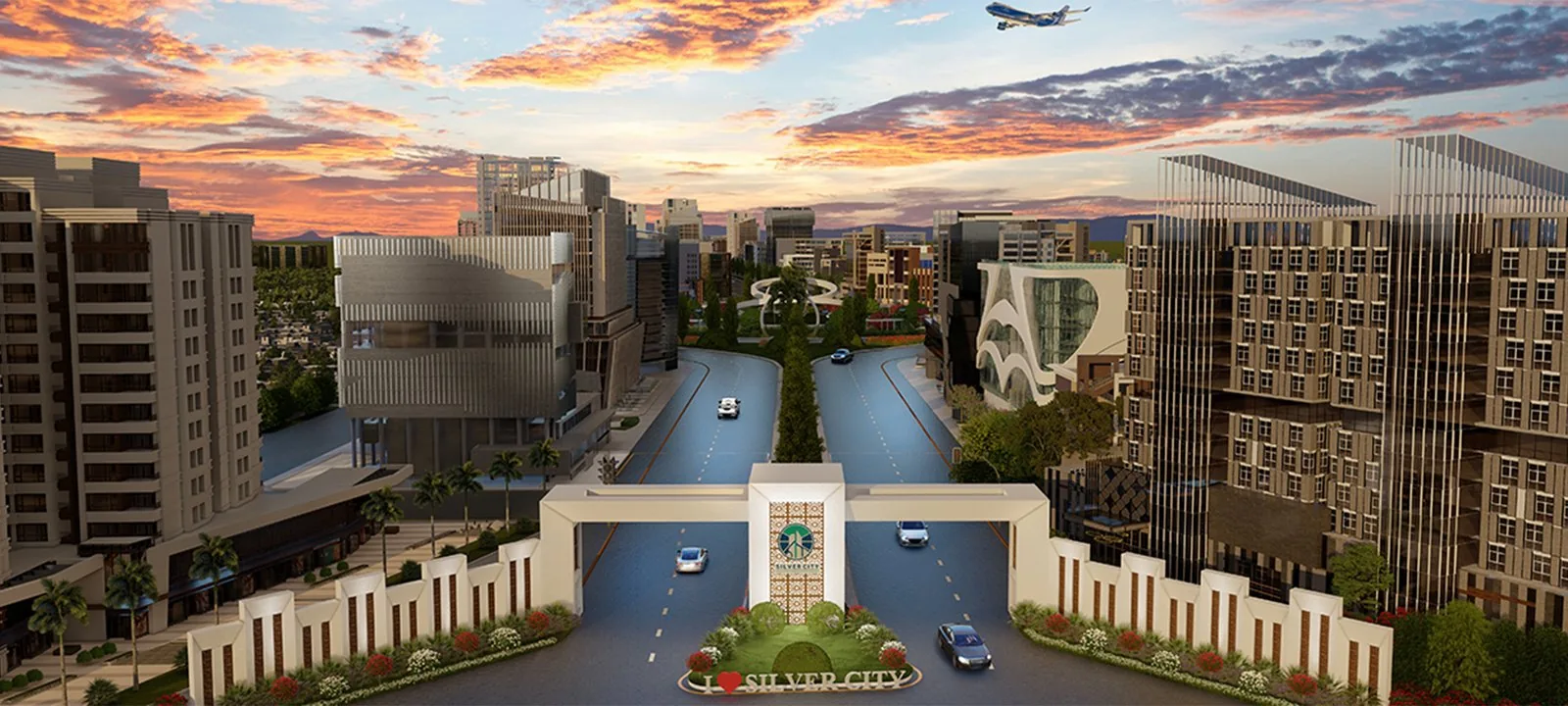
With steel up 12-15% and cement near Rs1,550 a bag, the cost of putting up a grey structure has outpaced the appreciation you would capture on an unbuilt plot in the same period. For most Pakistani investors focused on capital growth, that tilts the answer toward holding well-located land and building only when there is a clear personal-use or yield reason. If you are entering the market or diversifying, a plot in an RDA-approved society such as Silver City on Girja Road near the Thalian Interchange, offering 3.5, 5 and 10 marla and 1 kanal plots with flexible installment plans, is a location and legal profile worth considering as your appreciation engine, with the option to build later once the cost cycle turns in your favour.
@@END@@